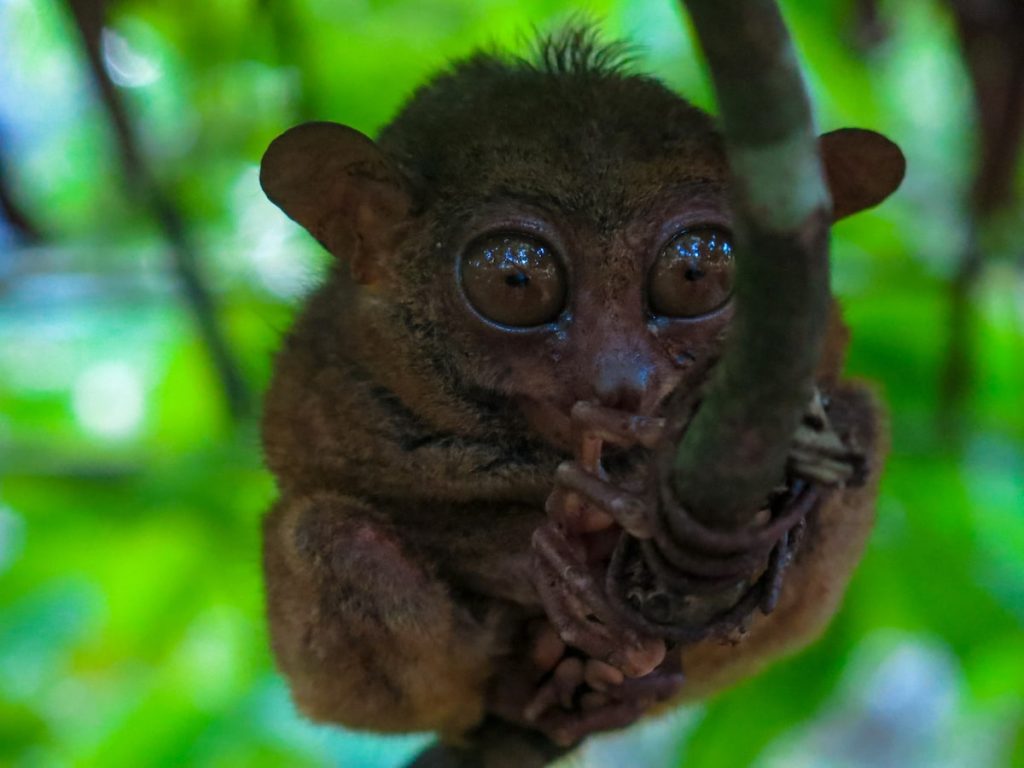
Is the tarsier suicidal, or is that just an urban myth?
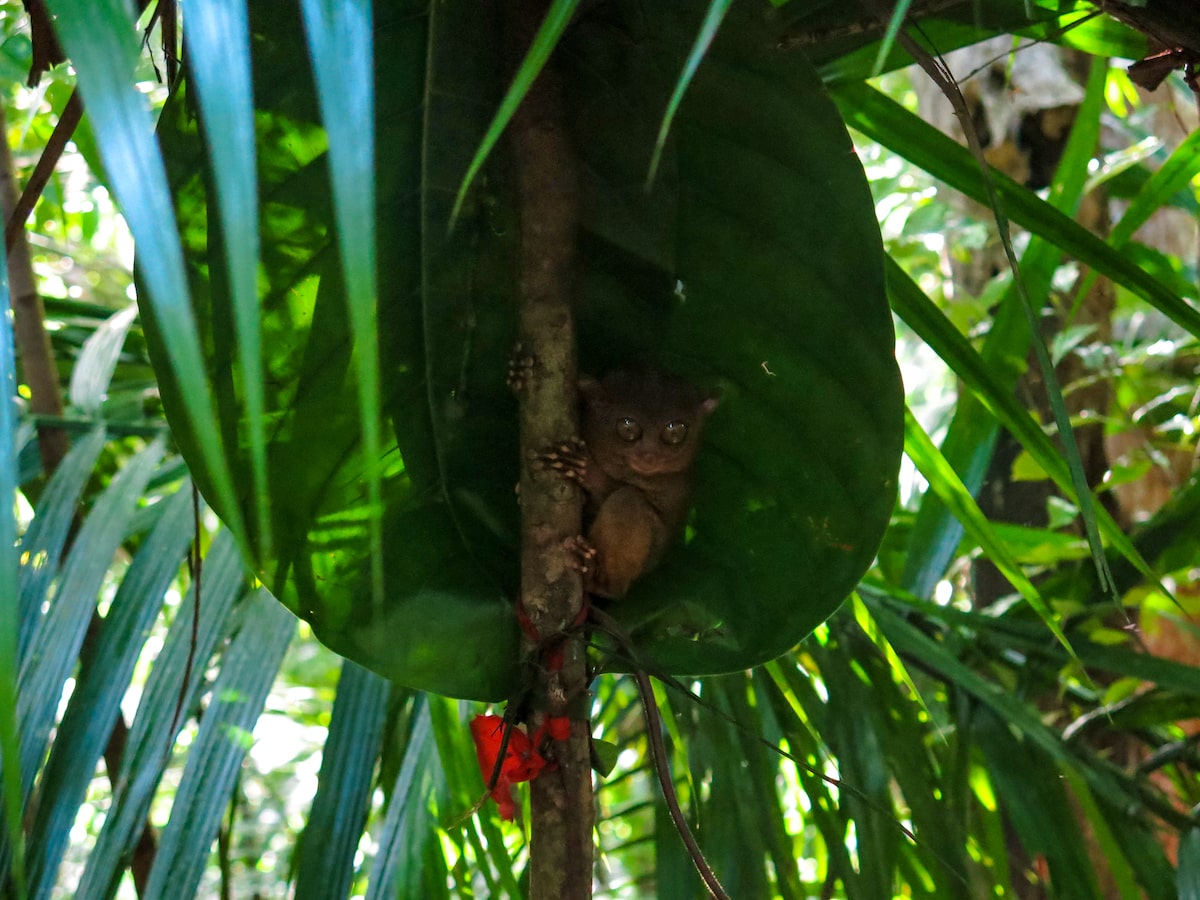
I absolutely love learning about weird/quirky animals when I’m on the road. So the elusive tarsier; the tiny, nocturnal primate of Bohol Island in the Philippines certainly caught my attention when I first read about it.
I’d put the tarsier up there with the common spotted cuscus of Papua New Guinea, in terms of loveable and odd animals that I did not know existed until I started travelling and seeing them for myself.
My primate travel bucket list goal is looking strong…
I’ve seen Proboscis Monkeys and Orangutans in the wild in Borneo, been up close and personal with a silverback gorilla in the rainforests of Uganda, braved The Monkey Buffet Festival in Thailand and although the bisexual bonobos of the DRC still evade me, I was lucky enough to meet the tarsier, making my way over to Bohol after swimming with whale sharks in the neighbouring island of Oslob.
Fascinating Facts About The Philippine Tarsier (& Other Tarsier Species!)
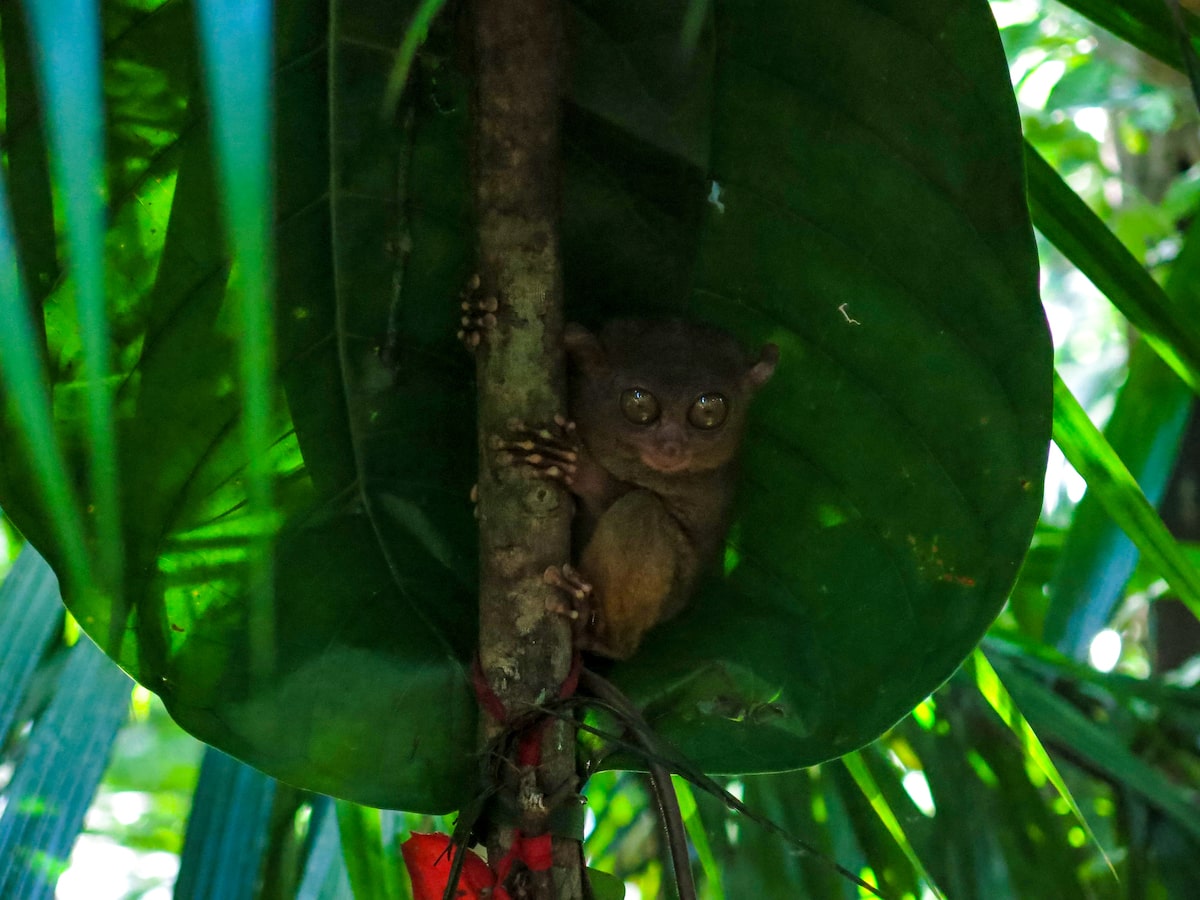
Apart from the obvious, like these creatures being tiny with distinctively big eyes; tarsier life is incredibly sophisticated, difficult, ruthless and often heartbreaking.
Also, the Philippine tarsier isn’t the only type of tarsier, it’s just a tad more famous, so let’s dig deep and get our geek on with these 18 fascinating facts about tarsiers!
1. Tarsiers are now only found in the Southeast Asia region
Originally discovered in North America, Europe and Asia, they now only exist in Southeast Asia.
Although the majority of them inhabit the southern islands of the Philippines (mainly Bohol), they also reside in Indonesia (Natuna Islands, Banka Islands and Banka Belitung Islands and also in parts of Indonesian Borneo).
2. The tarsier is on the verge of extinction
The main culprits are humans (engage in a sarcastic shocked tone of disbelief) clearing land for animal agriculture and illegal logging. The second offender is the house cat, living up to their well-earned reputation of being cute genocidal maniacs, hellbent on world domination.
3. The tarsier is named after its extremely long bone
… its ankle bone, called the ‘tarsus,’ which is elongated, helping them to leap relatively long distances and wrap themselves around tree branches.
4. One single tarsier eye weighs more than its brain
One tarsier eye is also bigger than its stomach.
5. The tarsier’s eyes can not rotate within their eye socket
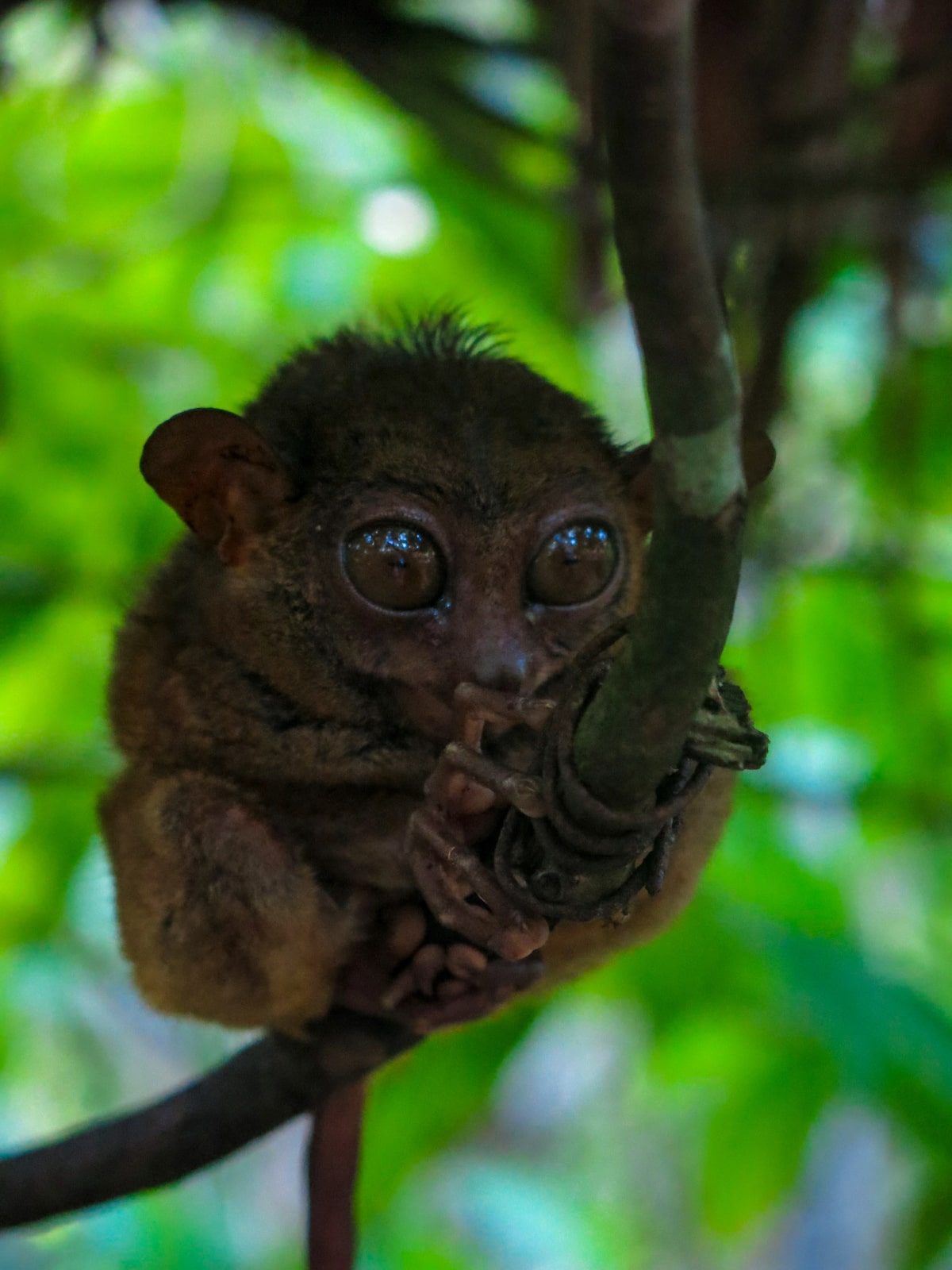
However, their neck can rotate 360 degrees, à la The Exorcist!
6. The tarsier has the largest eyes in relation to its body out of any living mammal
Including Steve Buscemi.
7. After one day of being born, a Tarsier can climb a tree!
What did your precious little whiny, nappy-crapping self do on your first day on Planet Earth, eh?
8. The tarsier is the smallest primate in the world
Its ancestral tree is a little complicated – the tarsier is related to larger monkeys, gorillas, lemurs and even humans, but it occupies a small evolutionary branch between the strepsirrhine prosimians and the haplorrhine simians.
However, being 3.5-6 inches tall is pretty much dwarfism in the monkey world.
9. Tarsiers usually fall prey to large birds
Mainly nocturnal birds of prey, such as the owl.
10. Tarsiers are nocturnal
Probably because they spend the whole night shitting themselves regarding the prospect of being eaten by owls.
11. The tarsier suicide claim is correct (and common)
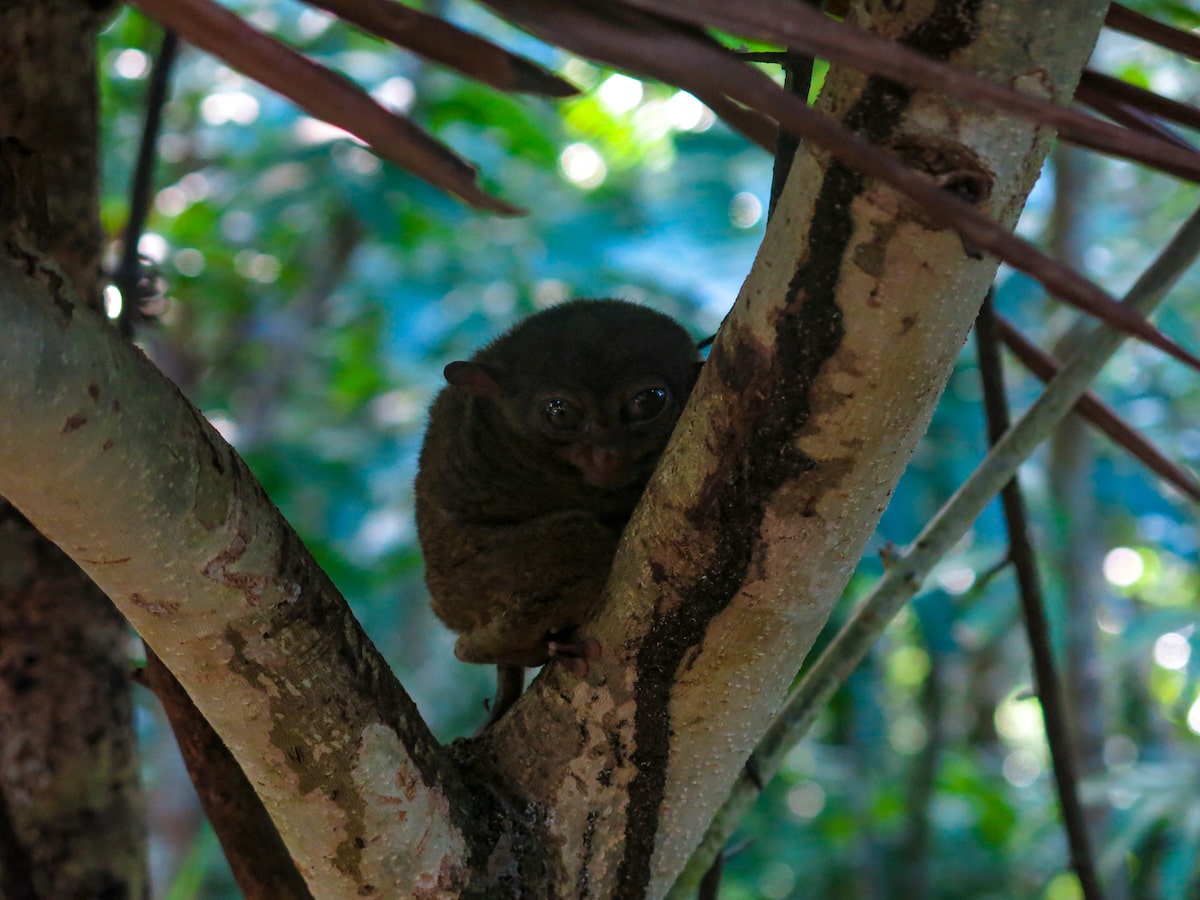
The title of this post is not a myth and sadly tarsier suicide is part and parcel of their lives. They can get very anxious, particularly in captivity.
Due to their nervous disposition, when stressed they can smash their heads off a tree until they kill themselves. The sanctuary that I went to make sure people didn’t get too close and left the flash off the camera.
12. Tarsiers are the only entirely carnivorous primates
While most apes have evolved to be omnivores with a heavy herbivorous leaning, tarsiers have evolved to eat insects, rodents, reptiles and small birds exclusively. So they are very much both the predator and the prey, a very complex life indeed for these tiny little mammals.
13. Tarsiers ‘claim’ their sexual mates during intercourse
When a male tarsier has sex with a female tarsier he leaves a ‘mating plug’ inside her vagina, a gelatinous secretion which hardens when inside, which is a way of saying to all the other horny tarsier lads; “get your filthy hands off, I saw her first!”
14. Tarsiers freak out some indigenous tribes of the Philippines
They look at the tarsier as a sign of bad luck and if they accidentally harm or scare one – they apologise to the spirits of the forest, as they believe that they will encounter bad health.
15. The Horsefield’s Tarsier stands alone (probably)
The only species of tarsier that is found in Borneo is called the ‘Horsfield’s tarsier,’ and it’s been doing biologists’ heads in for two decades! After 20 years, there is still no overall agreement on whether it’s a subspecies of tarsier, however, it’s distinctly different in appearance with a longer tail and reddish fur.
17. Pygmy tarsiers have risen from the dead!
Originally assumed extinct for EIGHTY YEARS, primate ecologist Sharon Gursky and a team of Indonesian scientists found dead and alive pygmy tarsiers in the mountains of Sulawesi Island! The data on how many are left is sparse, but there is conclusive proof that this once-assumed dead creature has risen from the ashes and still survives in its harsh climate. Respect!
18. Tarsiers have a complex language system
Tarsiers are known to communicate in duet calls at sunrise to let others know it’s bedtime and to provide information about their pair bonding. Even more impressively, tarsiers can make ultrasonic-range sounds to warn other tarsiers of human or animal predators, which can’t be detected by the predators.
I hope you enjoyed these facts about the Philippine Tarsier and facts about tarsiers in general. If like me, you are lucky enough to see one for yourself please be quiet, give them space and turn off your camera flash… I’m pretty sure none of us wants a tarsier suicide weighing on our conscience!

So where is the lady splooshing pic of a dapper Anthony Middleton cuddling one of these little guys? Kind of look like a big eyed version of a sugar glider huh? Nice one man.
Hi Anthony, great reading your travel stories once again. The Tarsier looks cute and reminds me of the endangered golden monkeys in Rwanda and Uganda. I had this opportunity to Visit Ethiopia and seeing the geladas (some type of baboon) was the most fascinating primate experience outside gorilla trekking off course. I am waiting to read about your experience in Africa – particularly East Africa. A lot of unique and great thing waiting for you to explore.